I began using AI to write code in 2022, building prototypes for customer pilots at my startup, Plentiful Stays. That work grew into nMODL2, which you can learn about below. AI was not yet good at programming, but I saw its immense potential and knew it would be the center of my career going forward.
nMODL2 will let you sit down with an AI, describe your business, and build a working simulation of it. You’ll bring company records and explain how the work gets done. The AI will write the model, ask about what it doesn’t understand, and revise it with you.
Suppose orders are piling up. Before hiring another packer, you could test whether the problem is too little packing capacity or the phone calls that keep interrupting the work. nMODL2 runs the model and records the events, so you and the AI can follow what led to the result.
AI tools nMODL2 will work with
Codex Work
Claude Cowork
Claude Code
Grok Bot
Meta Muse
Openclaw
Do we need another packer?
Example conversation and results
You & your AI
You
Could you model our order-fulfillment business?
Business notesOrder history
Your AI
I’ll start with these records. What usually holds an order up?
You
Packing. The same two people also handle customer calls.
Your AI
Then the model needs to account for both jobs taking up their time. I’ll compare the current setup with adding packing capacity and moving the calls to someone else.
↳
nMODL2Model revised · Three scenarios run
You
Show me the queue in a chart.
Ask for another view
An AI-written brief
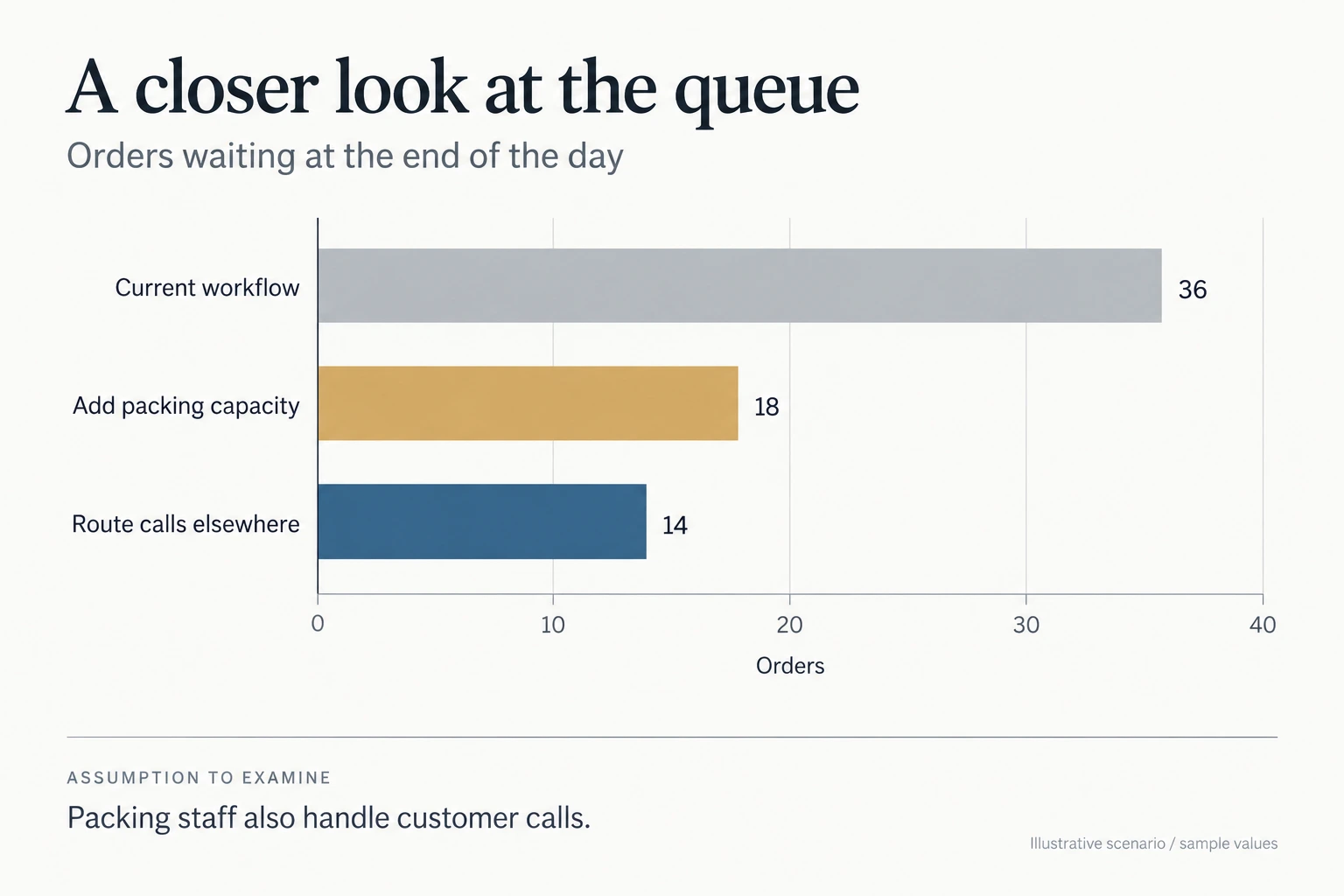
Moving the calls leaves fewer orders waiting.
The model assigns packing and calls to the same two people. In these runs, moving the calls reduces the packing queue more than adding capacity.
Sample modeled orders waiting at the end of the day
Scenario
Orders waiting
Current workflow
36
Add packing capacity
18
Route calls elsewhere
14
Before moving the calls
Who would answer them, and what other work would they have to put aside? We should include that work in the model before deciding.
A diagram drawn by your AI
Two people are doing both jobs.
Both jobs draw on the same two people’s available time.
Orders
↓
Waiting to be packed
↓
Two people · Shared time
Packing↔Customer calls
↓
Dispatch
Next, we can include the other work done by whoever would take over the calls.
nMODL2 runs the modelYour AI draws the chart or writes the brief
01 / Comparing extra packing capacity with moving the phone calls.Invented example · Sample results
Beyond the KPIs.
Moving the calls can shorten the packing queue while overloading someone else. nMODL2’s proprietary Qualia system gives frontier AI models a way to reason about what the simulated participants experienced. You and your AI will be able to examine those consequences alongside the financial and operational results.
Into AI’s thought space.
nMODL2 captures semantic meaning from what happens in a simulation, bringing the modeled business into the language and concepts that frontier AI models reason with. You’ll be able to take that representation to whichever frontier model you’re working with at the time. As the models improve, you’ll be able to return to the simulation with a more capable reasoning partner.
How the model is built and improved +
nMODL2 has its own modeling language. It describes a business as agents, such as a packing team or a supplier. Each has its own state and rules for responding to events; contracts define how the agents interact. A supplier can start with simple delivery rules and later gain a model of its stock and replenishment, while keeping the same contracts with the rest of the business.
You and the AI will check the model against cases you already know. If it gets them wrong, you’ll work through the assumptions and correct them. You can then test changes and decide where more detail is needed. In the packing example, moving the calls raises a further question: what other work would their new owner have to put aside?
02
Relic
Semantic personality measurement
Live demo
Measuring personality in vector space.
I began with a question: could I compare a journal entry with Enneagram types in vector space? Mark Twain’s The Diaries of Adam and Eve gave me the first test subjects. That experiment became Relic.
An embedding represents text as a point in a 3,072-dimensional vector space, where aspects of meaning can be compared mathematically. I used descriptions of the Enneagram’s 27 subtypes to build a reference system in that space. Relic’s assessment uses it to score your answers and produce your personality profile.
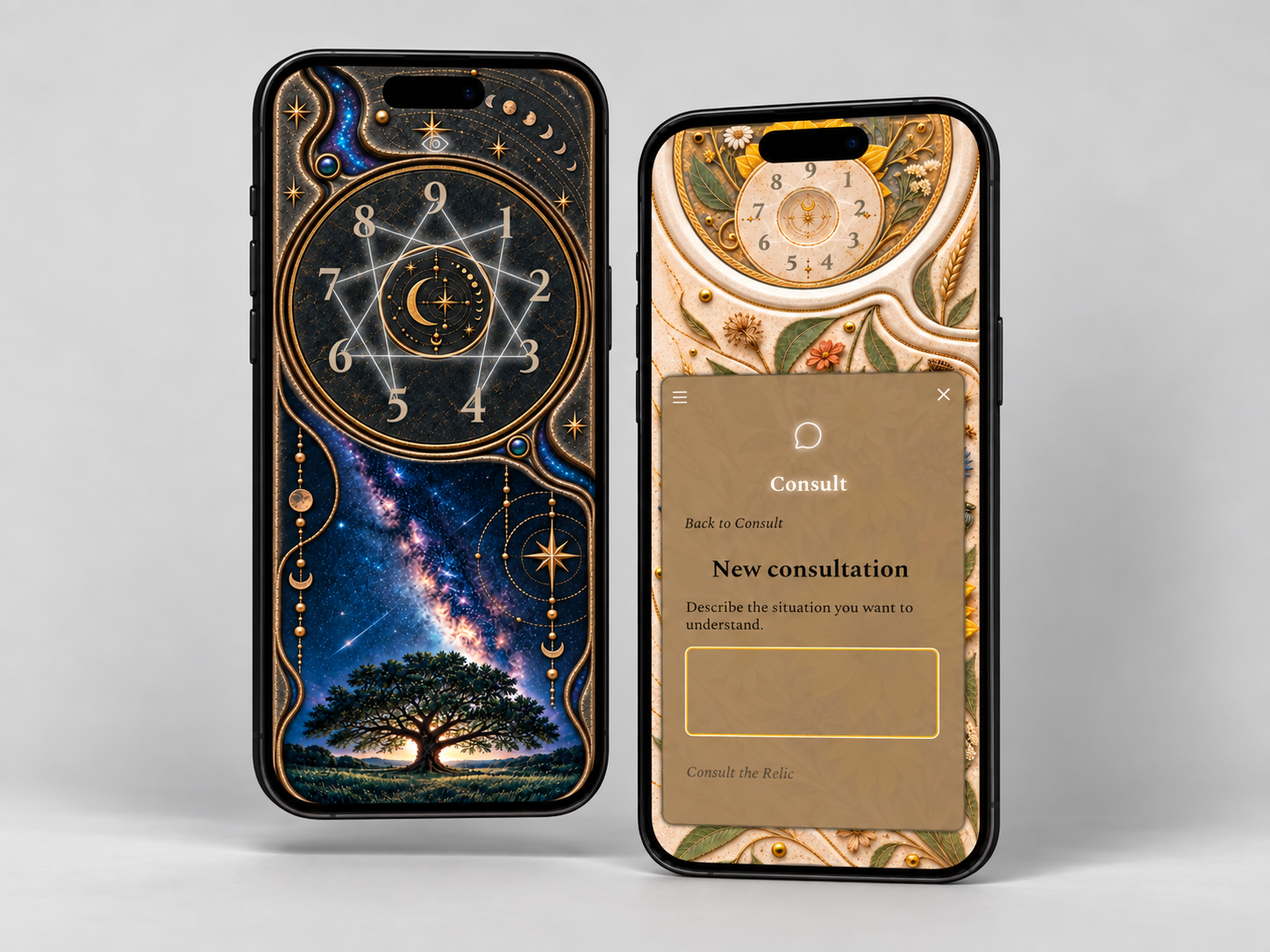
Once I could measure personality this way, I wanted to examine what happens when that person encounters a particular situation. Describe something happening in your life and Relic analyzes it in the same semantic space. An AI uses your profile and that analysis to suggest two approaches: one that works with your usual tendencies, and another that draws on balancing tendencies. You can ask follow-up questions and return to the conversation later.
Take the assessment yourself, or start with a prepared example.
02 / Two views of Relic.Phone mockups
The platform
A tool other apps and AI can use.
The platform will make this measurement and analysis available to other software through an API, and to AI assistants through MCP. A coaching app could use someone’s assessed profile and the problem they bring to develop its advice. Enneagram is the first application. The same approach could support Big Five, strengths frameworks, or an organization’s own assessment model.
Where the project stands
Capability
Status
Assessment, readings & themes
Live demo
Consult, follow-ups & Journal
Live demo
Consult HTTP API
Built
Public API & MCP
Next
Additional personality frameworks
Future work
What the 3,072 dimensions measure +
Each embedding contains 3,072 numerical coordinates that together represent aspects of a text’s meaning. Relic compares those representations with reference points built for the 27 Enneagram subtypes. The resulting profile describes how your answers relate to those subtypes.
The assessment uses scores computed from these semantic comparisons. The same answers produce the same scores. When you bring a new situation, Relic measures its description against the same subtype references before the AI develops its advice. MCP will let an AI assistant request this analysis as a tool within its own conversation.
03
Farm Run
Local farms & food
An app prototype
What could you cook with this week’s crop?
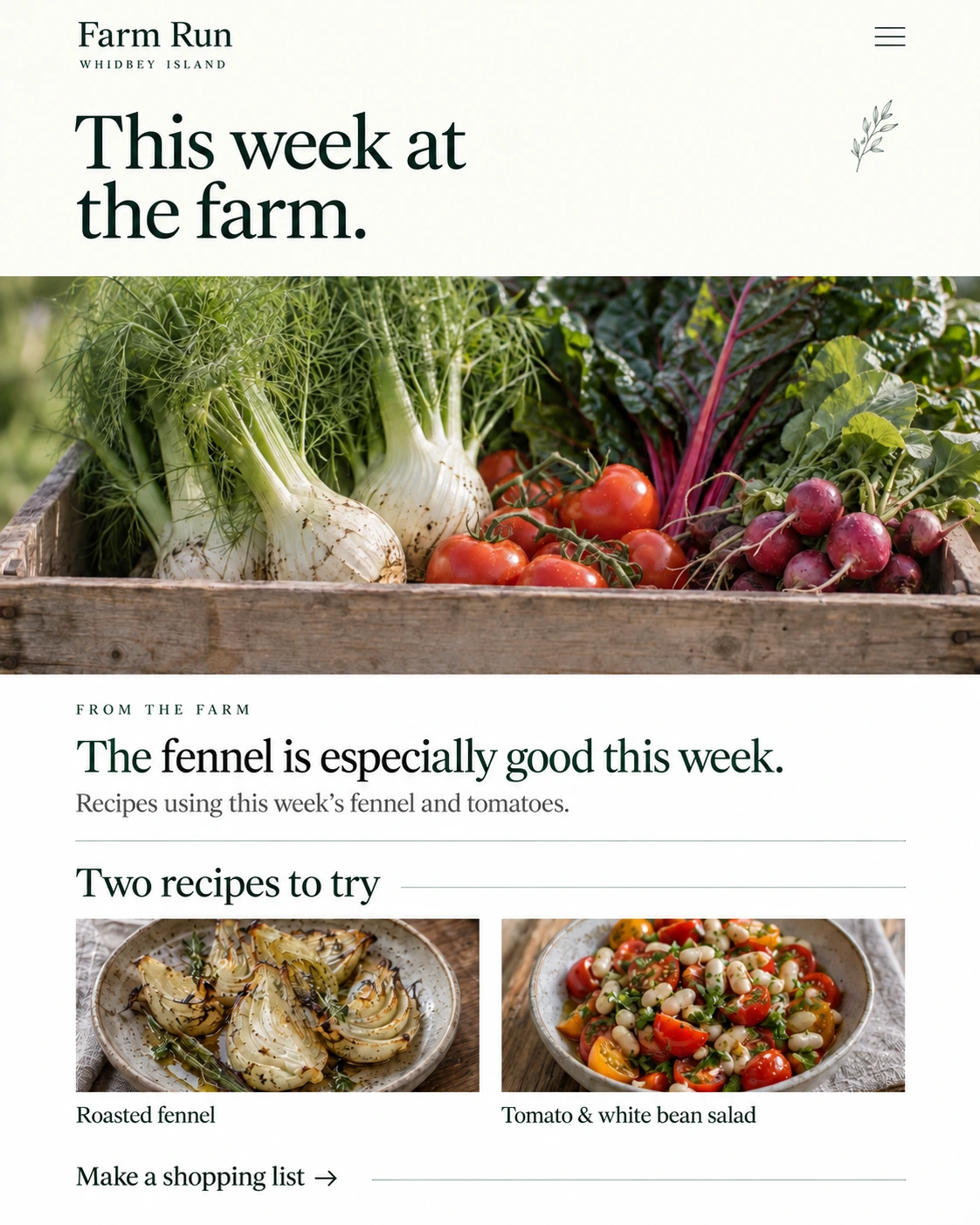
“The fennel is especially good this week.”
A farm may have plenty of fennel while someone nearby has never cooked it. I want Farm Run to take a farmer’s update and help that person decide what to make for dinner.
The AI could suggest a recipe and work out what else to buy. The customer would still buy from the farm stand, Food Hub, or grocer that sells the produce.
How the idea works +
The farmer should be able to say what is ready this week in their own words. AI would turn that update into recipes and shopping suggestions, with a person checking them before they go to customers.
The prototype uses sample data. Development paused for the farming season. We have also been bringing farmers, nonprofits, and local leaders together to discuss the app.
03 / Recipes made from a farmer’s weekly update.Example app screen
04
Fractal Context
Language model research
Research in progress
Could a fractal idea help a language model learn?
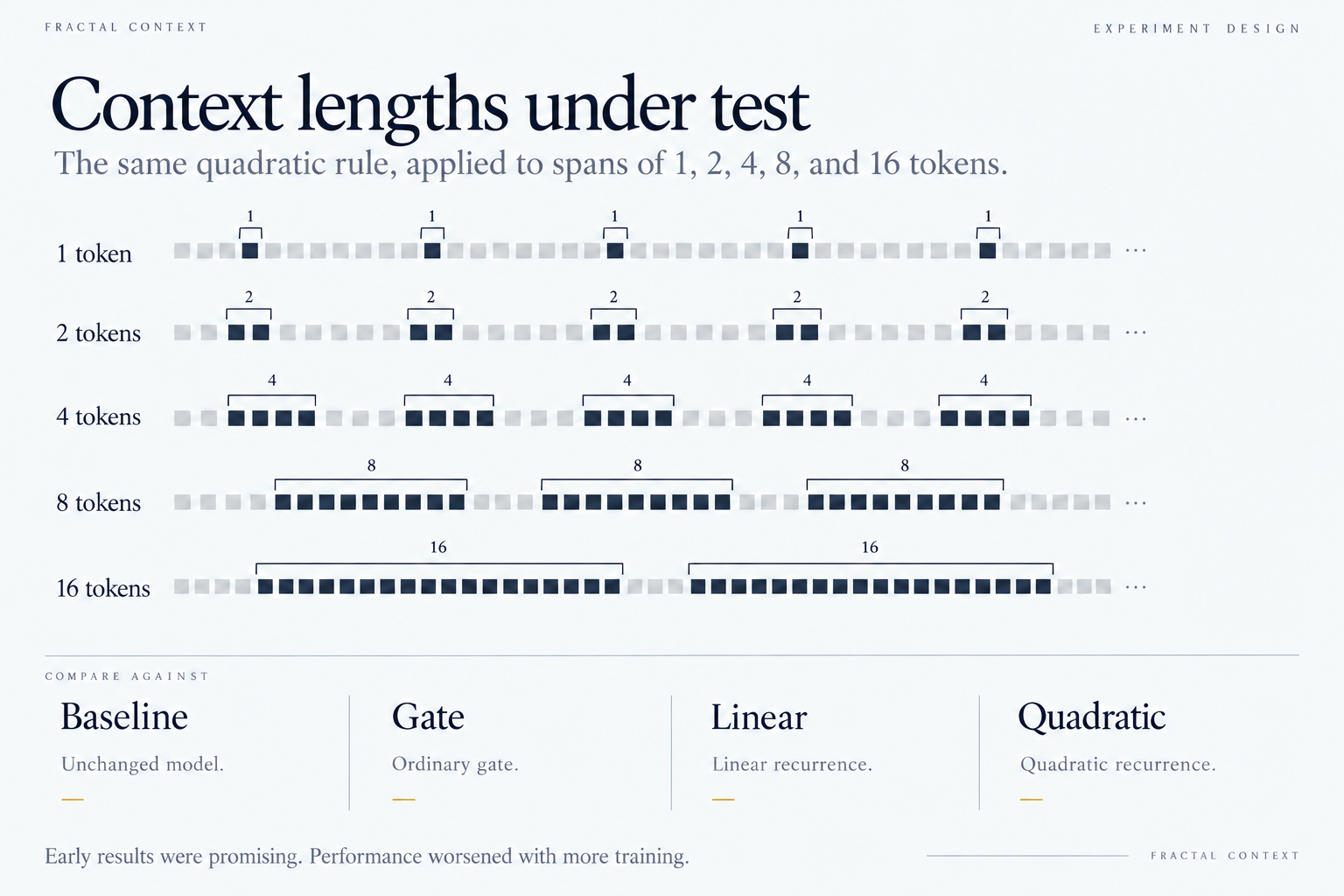
I’m interested in whether patterns that recur at different scales could help a language model learn. The first experiment, built with AI in nanochat, was a way to get started. It used spans of 1, 2, 4, 8, and 16 tokens. I expected those spans to be too small to reveal much fractal similarity. The early results looked promising, but performance got worse with more training iterations.
The next experiments will use the model’s attention patterns to find scales that fit the text being read. We’ll begin by asking whether different attention heads pick up similar information across different spans, and whether giving that agreement more influence improves learning.
That seems more promising to me because we’ll be looking at scales the model finds useful. We can then widen the context and test for recurring relationships over larger stretches of text.
The next experiments +
Attention tells us which earlier tokens a model is drawing on at a given point. The first new test will compare heads that gather similar information over different distances and breadths of context. We’ll test whether the model can learn to use that agreement to make better predictions. Matching the shape of relationships across scales is a later, harder experiment.
We’ll use controlled examples with repeated structure at varying distances, then check whether the model learns the relationship when the wording or distance changes. After that, we’ll compare it with the unchanged model on real text. The small synthetic dataset used so far helps us check the mechanics; it cannot establish that the idea improves language learning.
04 / The starting experiment: five small token spans.Promising early results; worse with more training.
AI training & consulting
For people and organizations
Put AI to work in your organization.
Prompting AI is easy. Getting a return on what you spend is harder. I don’t stop at showing you how to use the tools. We look at the work your organization does, figure out where AI could save time or make money, and measure whether it does.
Learn to work with AI
I teach people to use AI on work they actually need to do. We practice giving it context, checking its answers, and revising the work together.
Get AI working in your organization
I help businesses and organizations decide where AI can be useful, choose suitable tools, and try them on a real task. Then we work through what the team needs to use them well.
I build websites and apps, provide AI training, and consult with businesses and organizations getting AI into their work. Tell me what you want to do and what has been getting in the way.